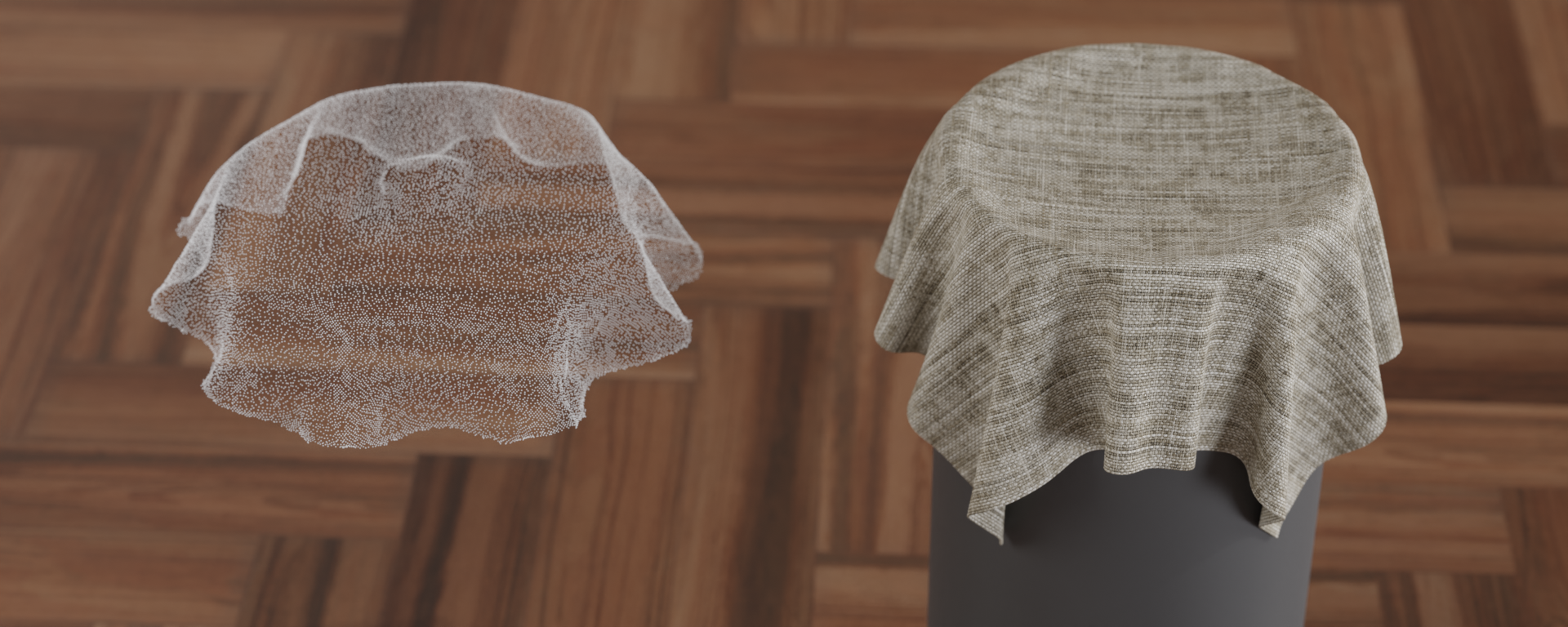
Making diverse fabrics usable for learning
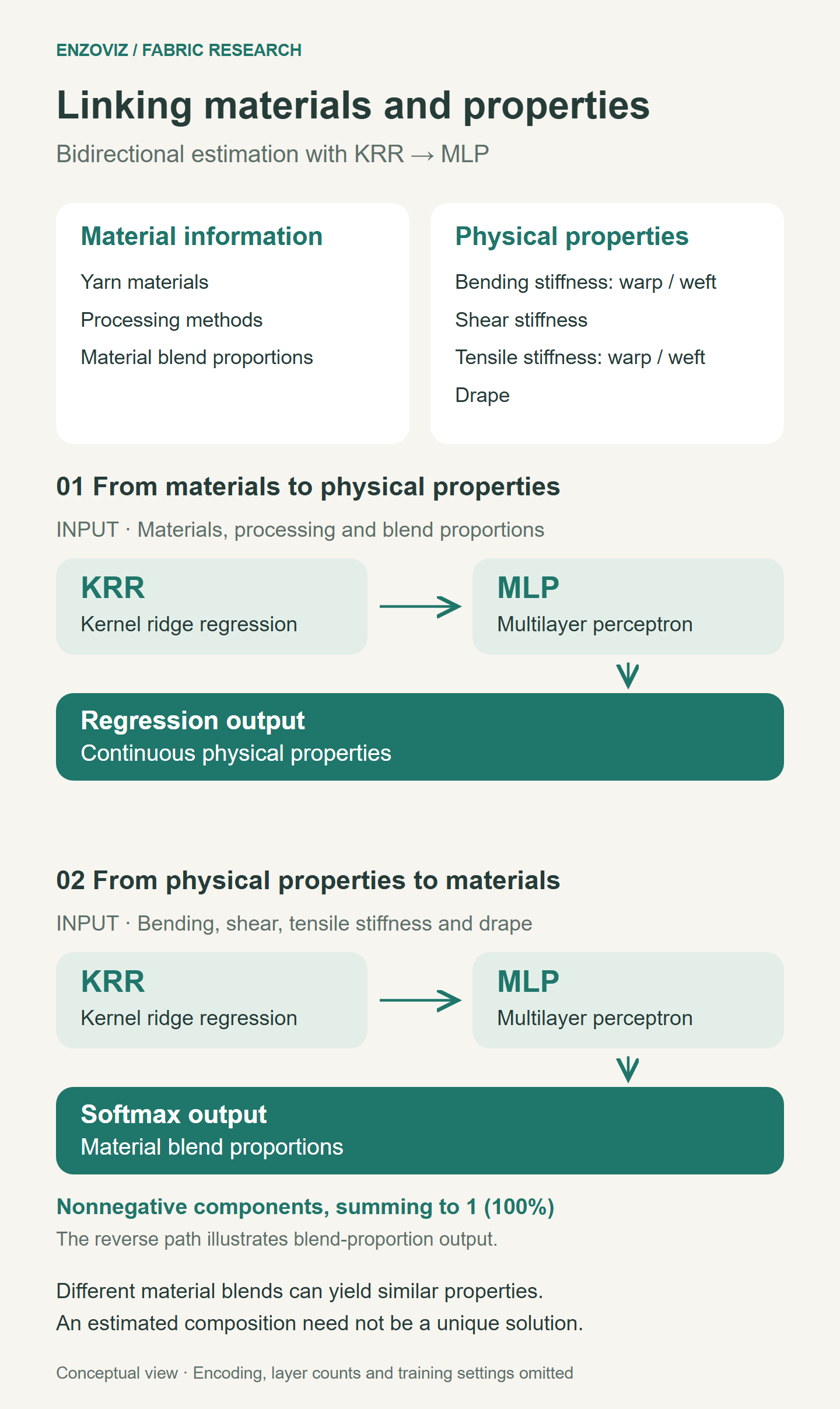
As materials and processes combine in more ways, fabric properties become more varied. Measurement standards do not make measurement easy, and describing everything consistently remains difficult. For a model predicting KES measurement attributes, I started by making the fabric data comparable.
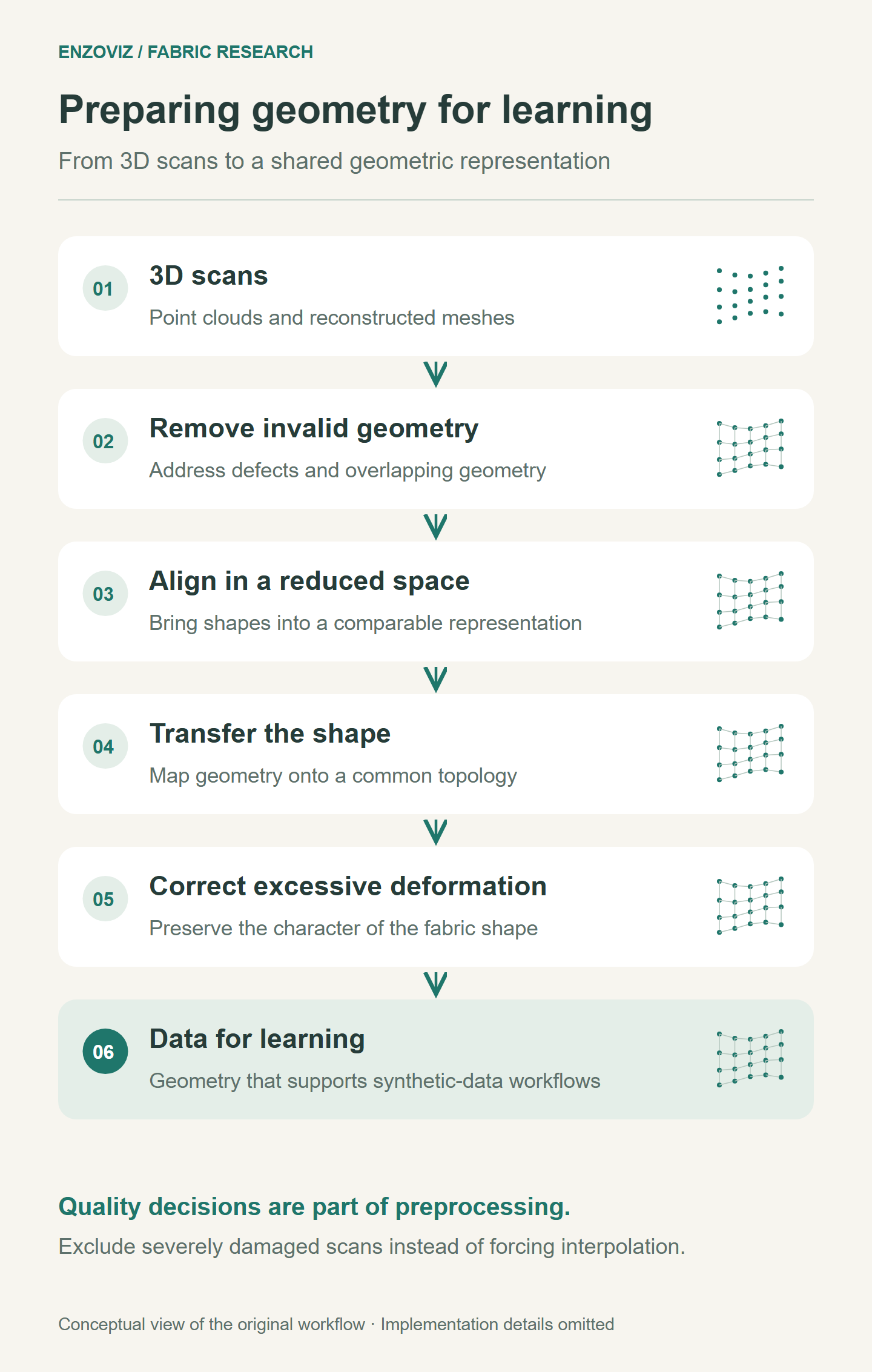
Aligning to a common topology
The 3D data was recorded as point clouds and converted into geometry through Poisson reconstruction. Topology and data size differed between models. For learning, I needed a common representation while preserving good geometry and interpolating where needed—the central challenge in alignment and shape transfer.
From scan to training model
Recognizing invalid geometry
Problems left by Poisson reconstruction disrupted alignment in the reduced-dimensional space. I implemented detection and removal of the following mesh defects.
- Tunnels
- Overlaps
- Holes
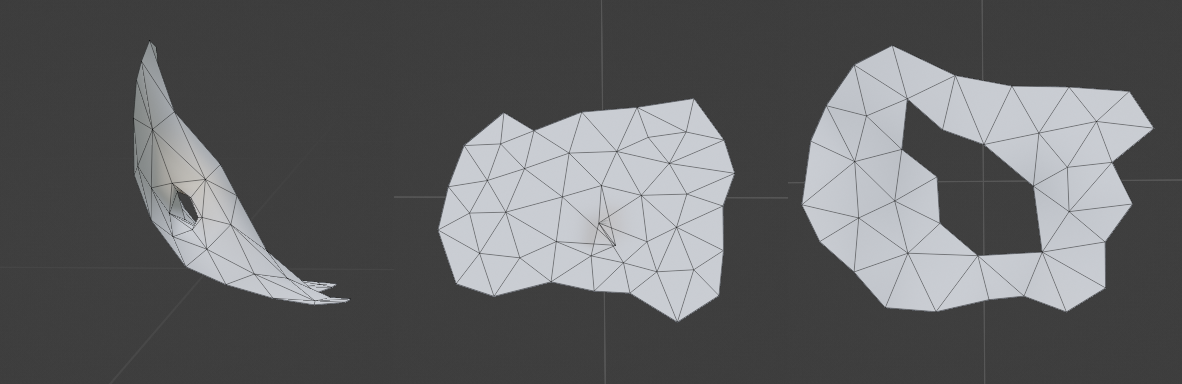
From left: tunnels, overlaps and holes.
Understanding the limits of reconstruction
If the original scan was too damaged—for example, with major losses at wrinkle peaks—interpolation could not recover the missing basis for the shape. I excluded those samples. In the data I worked with at the time, I reconstructed just over 97% of the 3D fabric models, helping expand datasets combining 2D and 3D information for training.