Garments, avatars and fabric
Among these three building blocks of digital fashion, how could we capture the appearance of fabric? As Disney’s Principled BRDF became a reference for PBR, I saw the need for a scanner that could produce suitable textures and began building a prototype.
This is a look back at the development of NUNO, the starting point for high-quality fabric-surface capture that later led to NunoX.
Developing the prototype
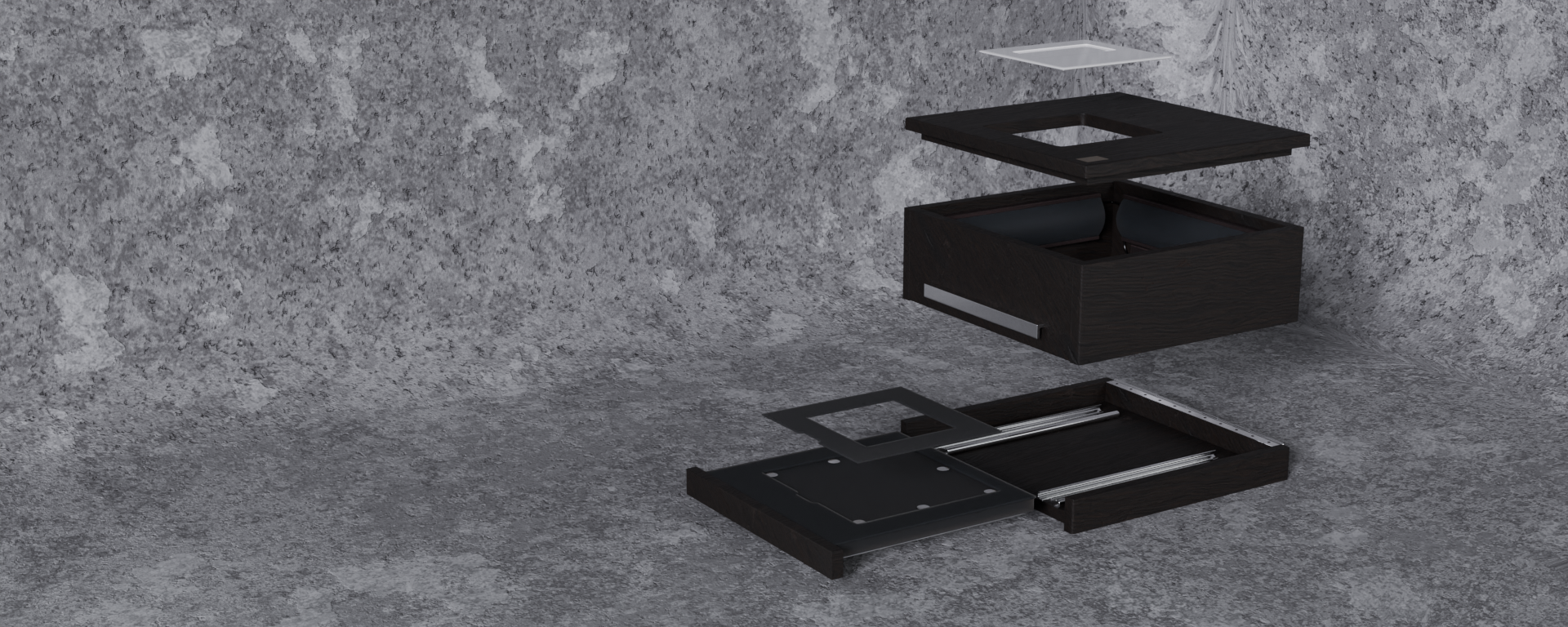
Hardware
In tangent-space normal maps, the X and Y directional components are encoded as brightness values from 0 to 1. I experimented with directional lighting by adjusting LED intensity and angle. The first experimental frame was made of Lego—amusingly, it cost more than the first wooden production frame that followed.
I chose an iPhone for capture because it made lens characteristics and calibration easier to keep consistent.
Software
Around 2016, I adjusted tone, brightness and saturation by eye in Photoshop. I then moved into automation with Adobe’s ExtendScript development tools, and later into Python and OpenCV.
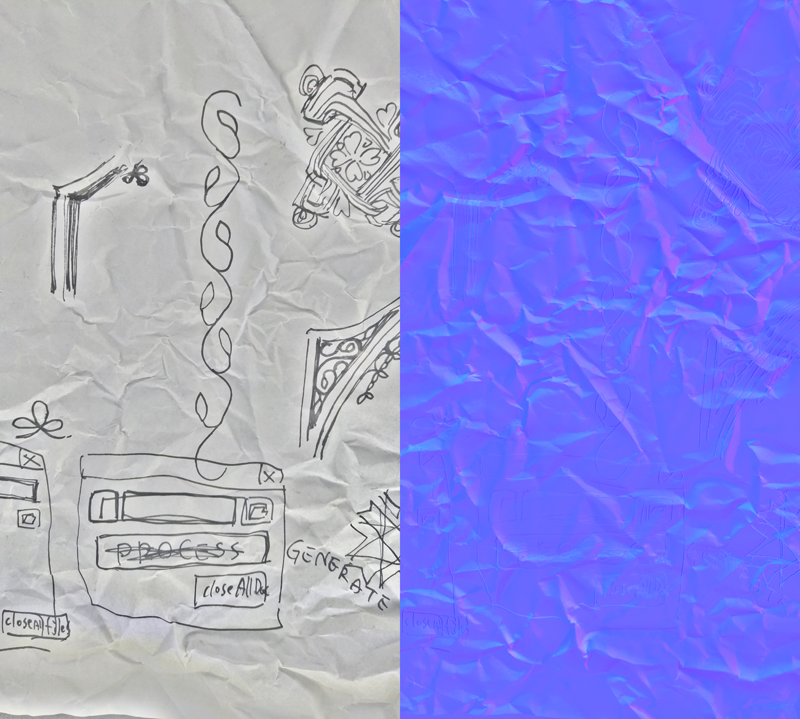
A surface-capture test using crumpled paper.
The work continued with reflection filtering, color temperature, inverse linearization and translucency on the hardware side. In software, I developed diffuse/albedo conversion and specular handling, followed by AI texture and physical-property prediction. These steps led toward NunoX.