Finishing a scan is the beginning of what we can do with a body. My work on TG3D LiveAvatar has included QM specification design, morphing, algorithm implementation and applications.
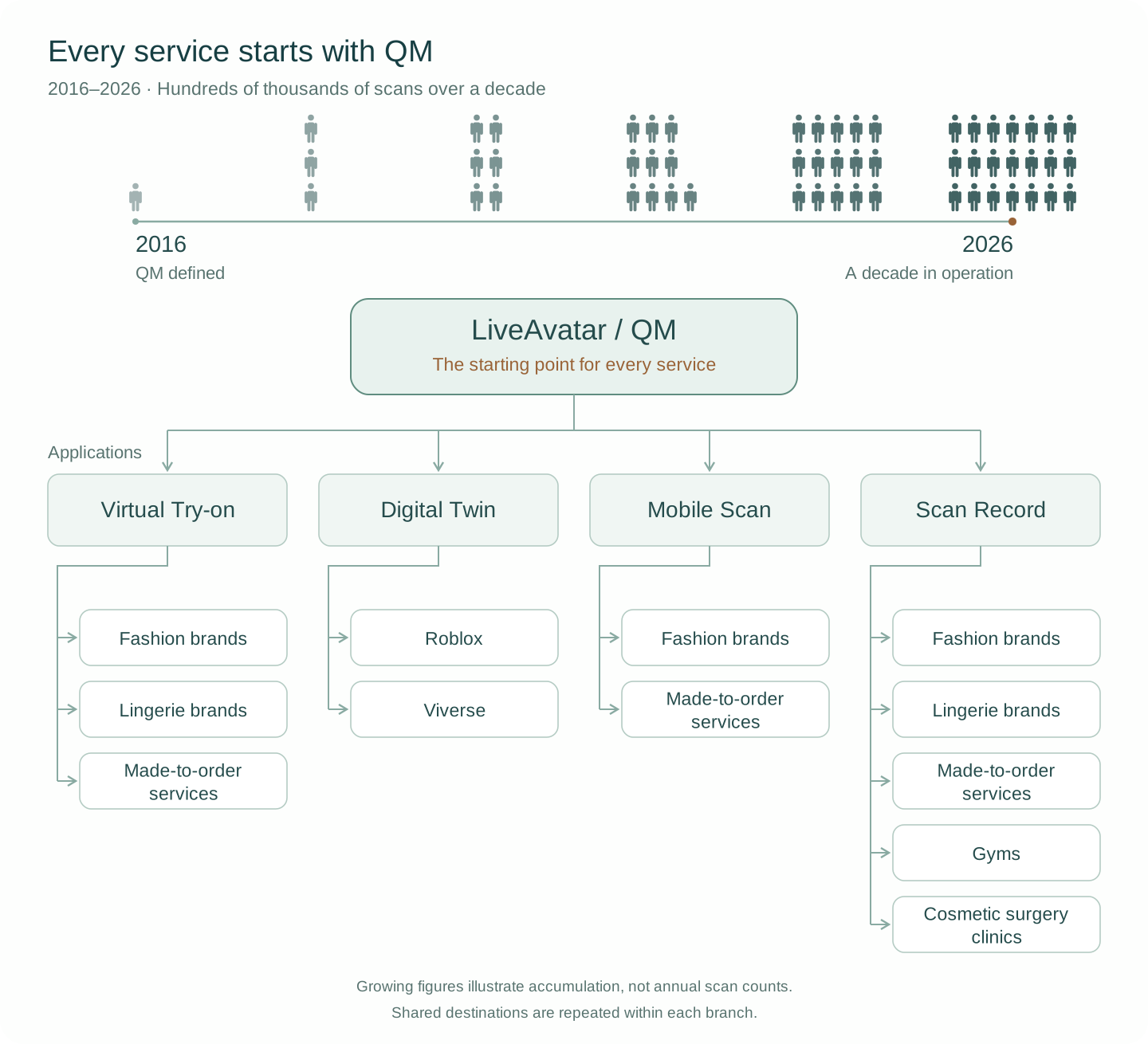
The system was defined in 2016. By 2026, it had carried hundreds of thousands of scans across ten years. What matters to me is not only the volume, but making each captured body usable beyond the moment of capture.
LiveAvatar / QM is the common starting point for all these services. Four applications grew from it, each connecting to its own uses and customers.
From a presentable image to a usable body
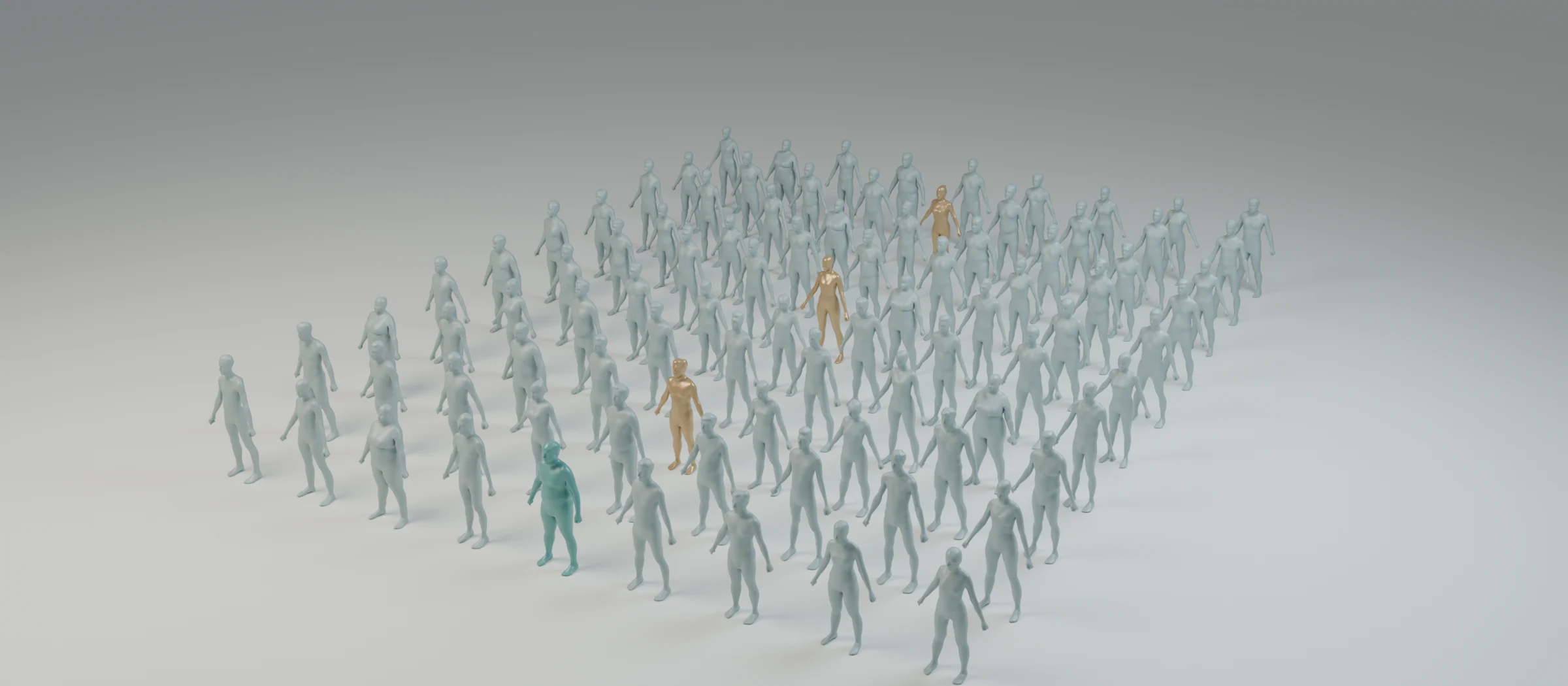
In my Privacy Scan article, I wrote about how people want their bodies represented. Reconstructing faces and surfaces was an entry point. With LiveAvatar, I have worked toward bodies that can change pose, wear clothing and move into other environments.
Each incoming shape is different, yet it needs a foundation that another application can use. That is how I think of QM. A cleaner-looking result is not enough if it loses the person’s body characteristics; appearance and shape both matter.
From QM to four applications
Virtual Try-on, Digital Twin, Mobile Scan and Scan Record: what I want to convey is that every service grew from LiveAvatar / QM. The bodies handled by QM extend into services shaped around different uses.
Virtual Try-on and Scan Record connect to fashion brands, lingerie brands and made-to-order services. Customers working with clothing have more than one entry point for using body data.
Digital Twin connects to gaming and virtual environments such as Roblox and Viverse. Mobile Scan connects to fashion brands and made-to-order services.
Scan Record also connects to gyms and cosmetic surgery clinics. The question I explored in Privacy Scan—how people want their bodies represented—also connects with these customers.
Loading a model is only part of making it useful. The original shape, its appearance in motion and the information passed to the next system all belong in the design. Connecting those concerns has been part of my work.
What I want to compare with SMPL and MHR
SMPL represents body shape and pose; SMPL-X extends the family with articulated hands and facial expression. Meta’s MHR separates skeletal structure from surface shape.
For me, the useful comparison is whether the representation preserves what an application needs.
I distinguish QM’s role as a system that carries scans into applications from the role of a body representation. For compatibility with SMPL or MHR, I separate transferring shape from transferring motion, then ask what each application needs to preserve.
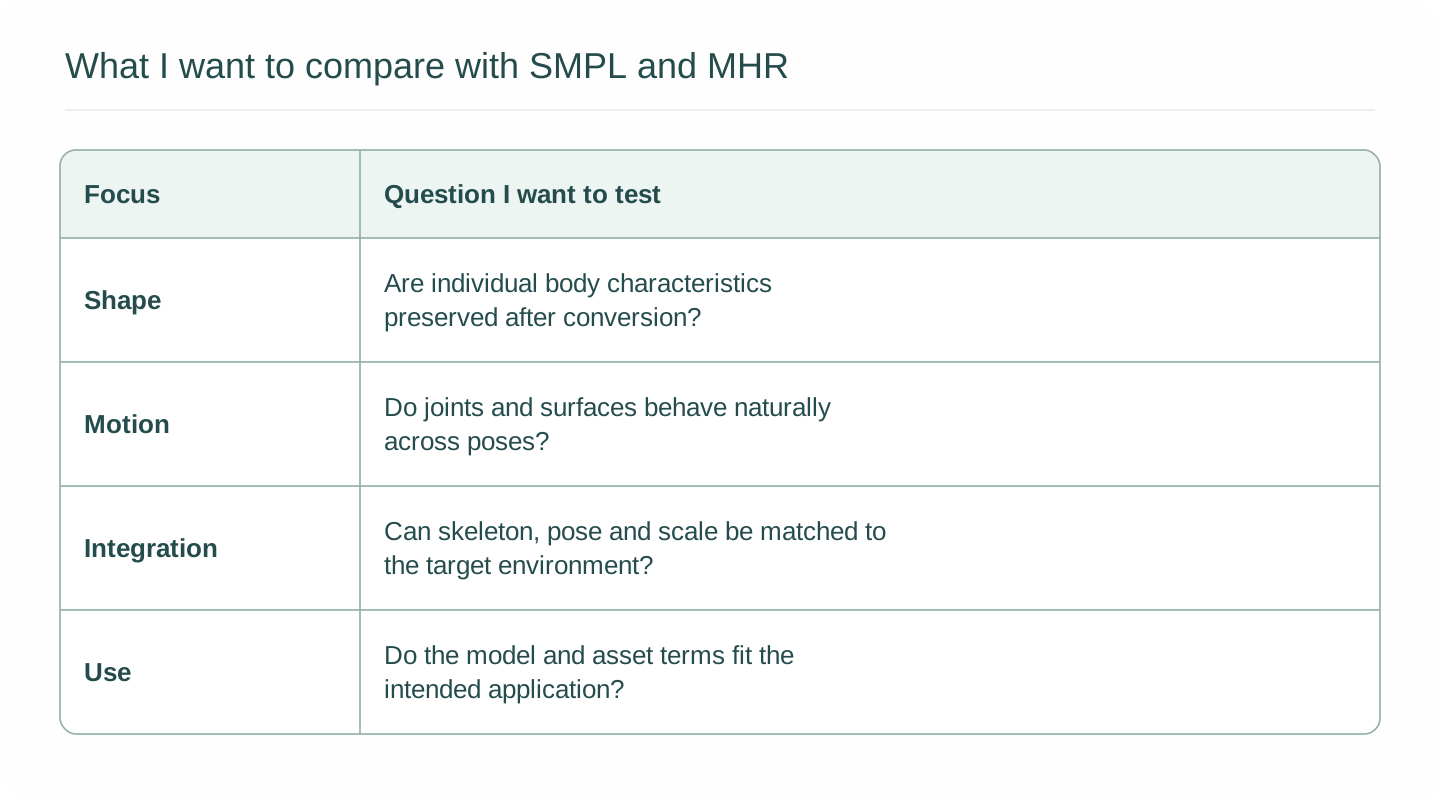
MHR provides a SMPL/SMPL-X conversion tool. That does not establish a direct QM connection. A comparison involving QM should check resulting shape and motion under matched conditions.
A decade of experience, a new entry point
I have worked to carry scanned bodies beyond the scanner’s screen: into try-on, virtual spaces and Mobile scan. The continuing task is connecting the capture of a body with its use.
Next, I want to look at what changes when two photographs become the entry point.
The body series
Privacy Scan — How do we want our bodies represented?
The anniversary banner began as a 3D render of QM output meshes arranged in formation with extruded “10 YEARS” lettering, then received an image-to-image finish. It is not a count or annual breakdown. The in-article render arranges supplied output meshes. The diagrams are conceptual.